Introduction
Moving to the cloud is no longer a technical decision — it’s a business transformation.
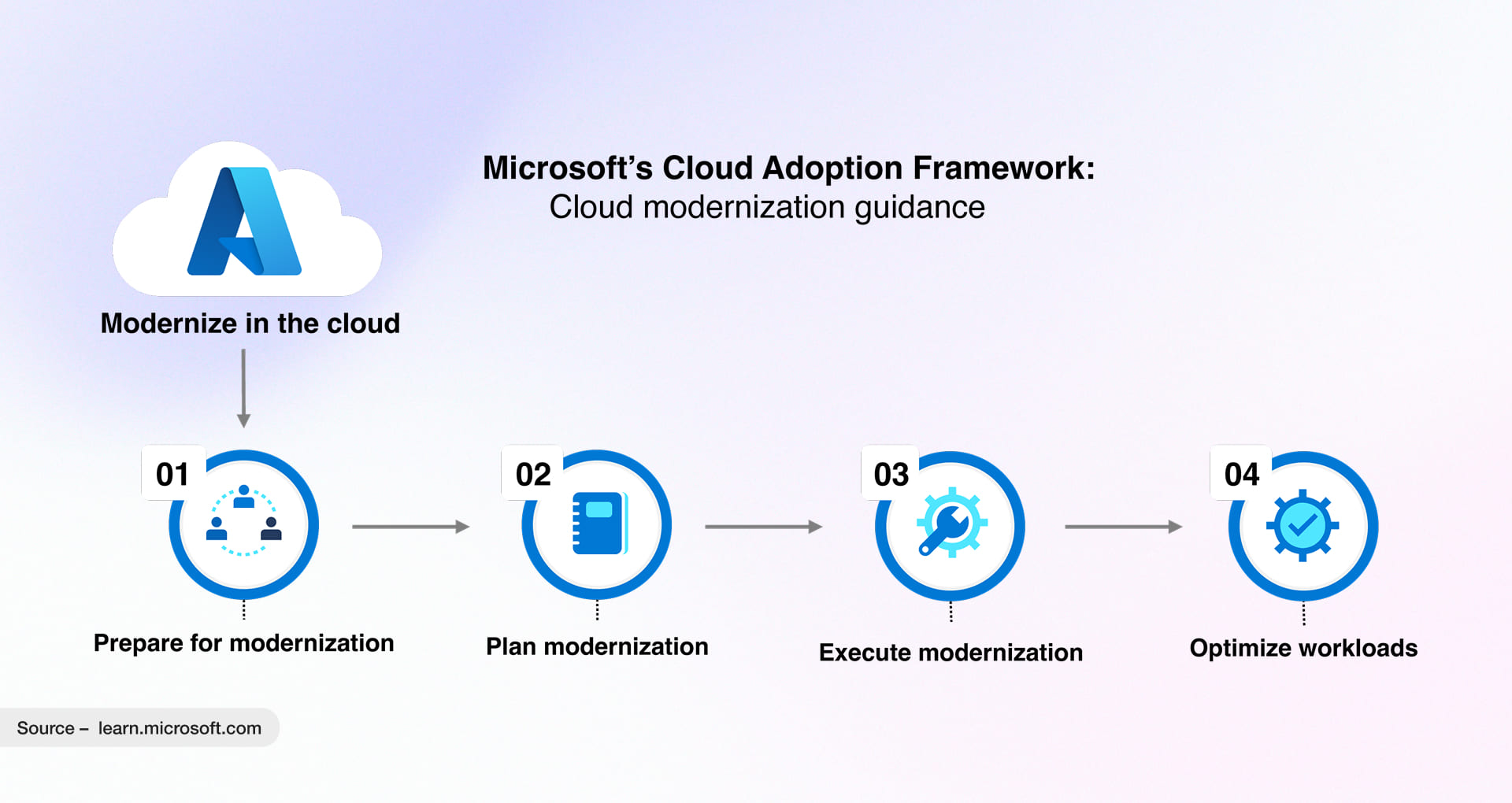
The Azure Cloud Adoption Framework (CAF) provides a structured approach to help organizations successfully adopt cloud technologies while aligning business goals, governance, and technical implementation.
Instead of guessing your way into Azure, CAF gives you a proven roadmap built from real-world experience.
What is Azure Cloud Adoption Framework?
The Cloud Adoption Framework is a collection of best practices, tools, and guidance designed to help organizations:
- Define their cloud strategy
- Plan and execute migrations
- Build scalable cloud environments
- Govern and optimize operations
It bridges the gap between business objectives and technical execution, ensuring that cloud adoption is not chaotic but controlled and value-driven.
The Cloud Adoption Journey
Although every company has a unique path, most cloud journeys follow similar stages:
1. Strategy
Define why you are moving to the cloud.
- Business goals (cost reduction, scalability, innovation)
- Stakeholder alignment
- ROI and business case
👉 Without a clear strategy, cloud adoption becomes expensive experimentation.
2. Plan
Translate strategy into an actionable plan.
- Inventory current workloads
- Prioritize applications
- Define migration approach (rehost, refactor, rebuild)
3. Ready
Prepare your cloud environment before migration.
This is where Azure Landing Zones come into play.
- Identity & Access Management
- Networking (Hub & Spoke architecture)
- Governance structure
- Security baseline
👉 This step is often underestimated but is the foundation of everything.
4. Adopt
Start migrating or building applications in Azure.
Two main approaches:
- Migration (Lift & Shift) → move existing workloads
- Modernization → redesign applications for cloud-native
5. Govern
Ensure control as your cloud grows.
- Cost management (FinOps mindset)
- Policy enforcement
- Compliance tracking
6. Manage
Operate and optimize workloads continuously.
- Monitoring & alerting
- Performance optimization
- Automation
👉 Cloud is not a one-time project — it’s an ongoing process.
Azure Landing Zones (Core Concept)
One of the most important concepts in CAF is Landing Zones.
They are pre-configured cloud environments designed to host your workloads securely and at scale.
A typical enterprise setup includes:
- Hub Network → shared services (firewall, DNS, identity)
- Spoke Networks → application environments
- Centralized governance & policies
👉 Think of Landing Zones as the “production-ready blueprint” of your cloud.
Why CAF Matters
Without a framework, most cloud projects fail due to:
- Poor governance
- Security gaps
- Cost overruns
- Lack of standardization
CAF solves this by providing:
✔ Proven architecture patterns
✔ Governance models
✔ Security best practices
✔ Scalable design principles
Common Mistake
Many teams treat CAF as a rigid rulebook.
In reality:
CAF is a framework, not a law.
You should adapt it based on:
- Company size
- Team maturity
- Budget constraints
Real-World Insight (Senior-Level)
If you’re building a serious Azure architecture:
- Start with Landing Zones (Terraform/Bicep)
- Implement Hub-Spoke networking early
- Centralize identity and security
- Add AKS + GitOps (ArgoCD) for modern workloads
👉 This is exactly how enterprise-scale environments are built.
Final Thoughts
Azure Cloud Adoption Framework is not just documentation — it’s a strategy for success.
It helps you move from:
❌ Random cloud usage
➡️
✅ Structured, scalable, enterprise-grade architecture
If you want to stand out as a DevOps or Cloud Engineer, mastering CAF is a must.
Key Takeaways
- CAF aligns business and technology
- It provides a step-by-step cloud journey
- Landing Zones are the foundation
- Governance is as important as deployment
- Adapt the framework — don’t blindly follow it
References
- Microsoft Azure Cloud Adoption Framework Documentation
- Azure Landing Zones Architecture